Commercial solar and storage
Solar and storage for businesses, and for multi-unit property.
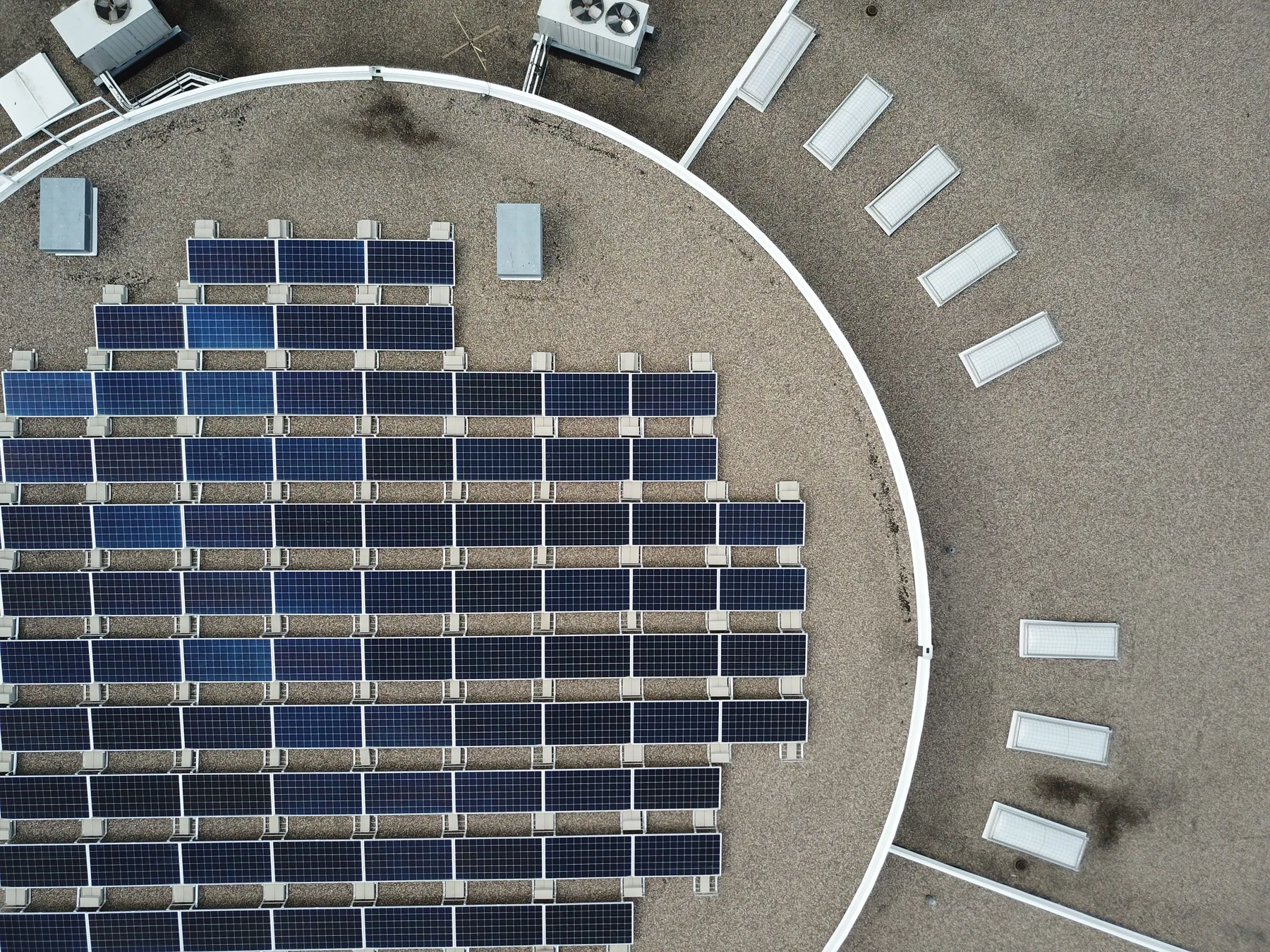
Commercial roofs are usually flat, large and unshaded, which makes them good for solar — but the economics work differently from a house. Demand charges, time-of-use rates and the size of the array all change the answer, and the right system is often the one that shaves peak demand rather than the one that produces the most kilowatt-hours.
The engineering is different too: ballasted mounting rather than penetrating, three-phase service, larger interconnection processes, and structural review that takes the existing roof loading seriously.
Multi-unit residential — apartment buildings, condominiums, mixed-use — sits between the two, and how the generation is metered and allocated to units is usually the hardest question rather than the hardware.
The instant calculator on our home page is built for single-family homes and will not give you a useful commercial number. Talk to us instead.
The instant calculator on our home page models single-family rooftop solar only. For commercial, the useful next step is a conversation.
What the job includes
- Load and tariff analysis, including demand charges and time-of-use exposure
- Structural review of the existing roof and its remaining capacity
- Ballasted or attached mounting design as the roof requires
- Utility interconnection application and coordination
- Storage sizing where peak shaving or resilience justifies it
- Permitting, installation, inspection and commissioning
Worth knowing before you buy
- Why will the home calculator not work for my business?
- It models a residential tariff: a single energy rate and a fixed monthly charge. Commercial bills add demand charges based on your highest fifteen-minute draw in the month, and time-of-use periods that change what a kilowatt-hour is worth by the hour. Those two things often dominate the result, and a residential model ignores both.
- Can solar reduce demand charges?
- On its own, only partly and unreliably — a cloud passing at the wrong moment can set your monthly peak. Storage is what makes demand reduction dependable, because it can discharge on demand rather than when the sun happens to be out.
- What about apartment buildings?
- Technically straightforward, commercially not. The question is how generation is metered and credited between common areas and individual units, and the answer depends on the building's metering arrangement and your utility's programmes. It is worth working out before any design is drawn.


Your home. Your energy. Your future.
Find out what your home could save in about a minute.