Smart energy.
Better living.
Solar, battery storage and EV charging designed around you. Built to last.
Licensed & Insured
Bonded and insured
Reliable Equipment
Established brands
Local & Trusted
San Fernando Valley
Free Site Assessment
No obligation
Fully licensed & insured
Bonded and insured
Battery storage
Design and install
Local to the Valley
Serving 16 cities
Free site assessment
No obligation
One company. Complete energy solutions.
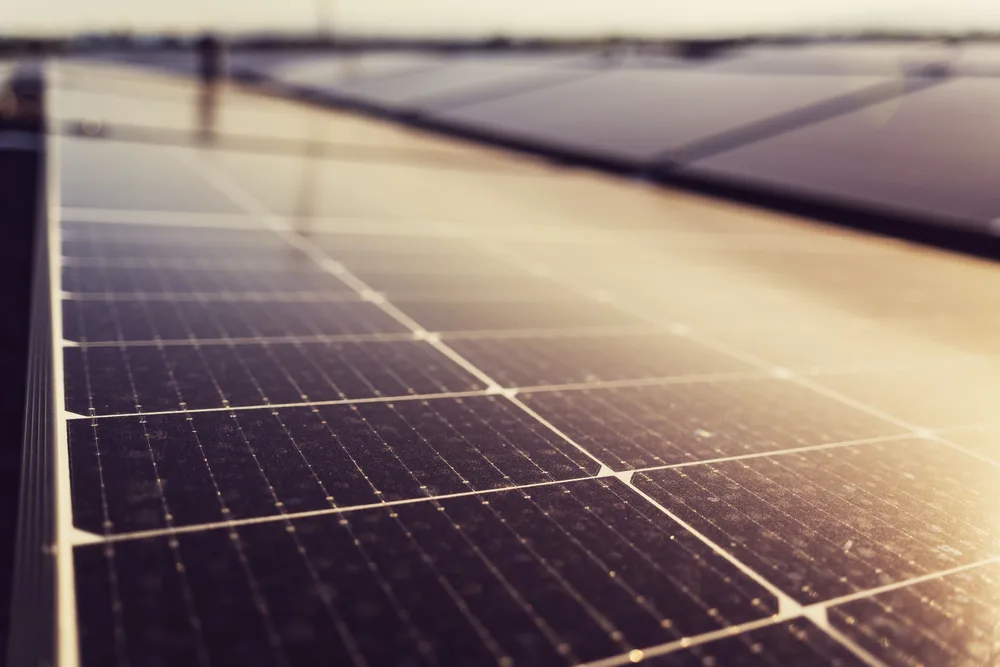
Solar
High-efficiency solar systems customized for maximum savings.
Learn more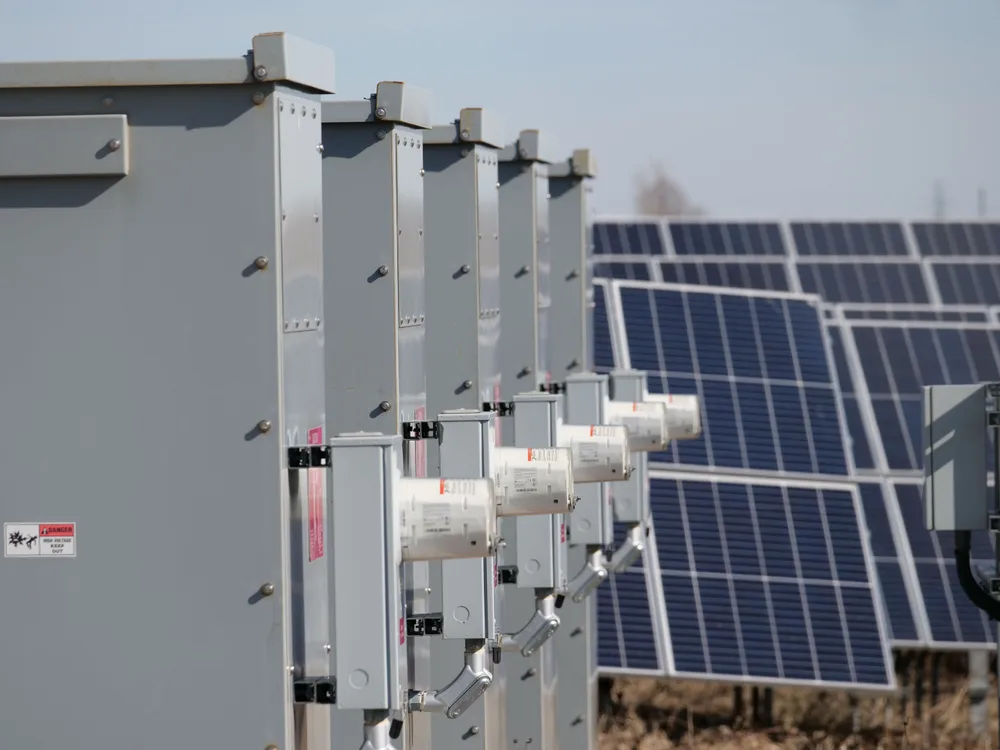
Battery Storage
Store energy. Power your home. Protect what matters most.
Learn more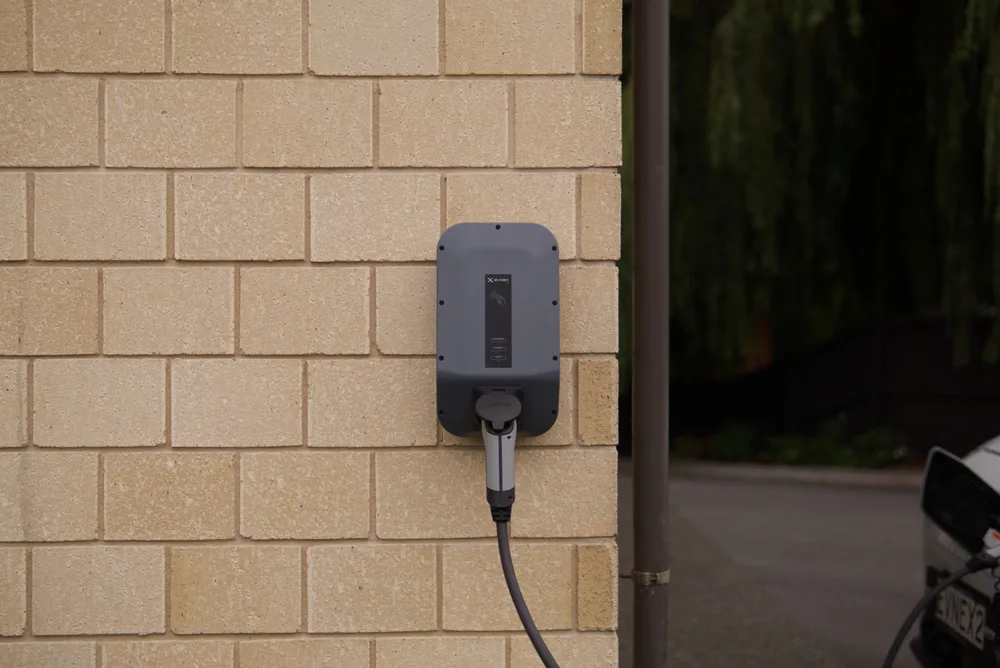
EV Charging
Home EV charging stations installed by experts.
Learn more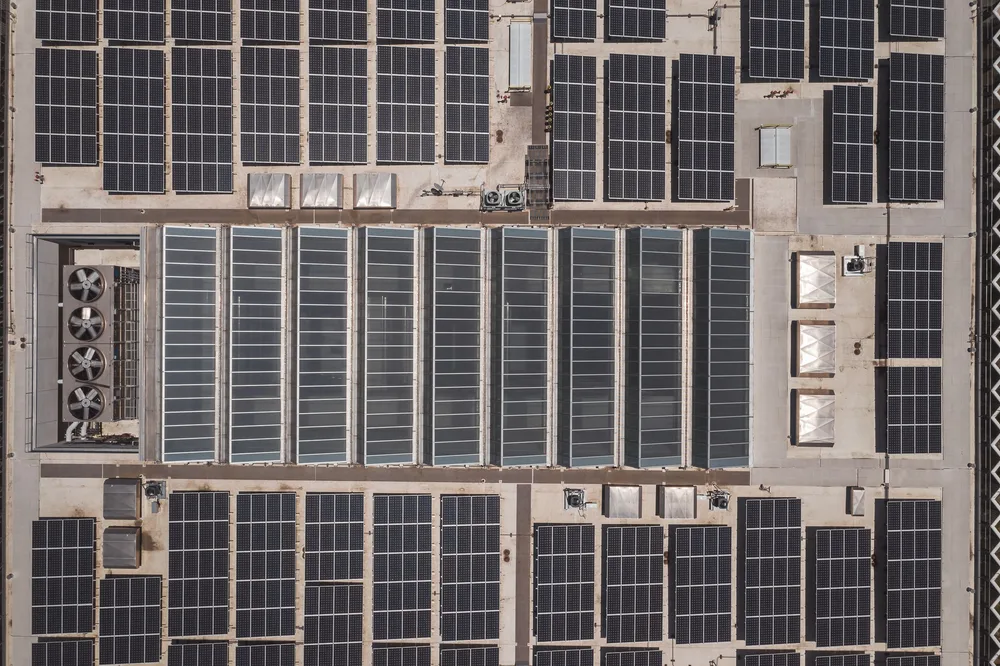
Commercial
Custom solar solutions for businesses and properties.
Learn more
How it works
01
Estimate
Get your instant solar estimate in about a minute.
02
Design
We design a custom system for your home and your needs.
03
Approve
Review your proposal and choose what works for you.
04
We handle the rest
Permits, installation, inspection, and utility connection.
How we compare
Against the two things most homeowners try first: a national installer, and a website that takes your details and sells them on.
| SoCal Good Solar | National installer | Lead-selling site | |
|---|---|---|---|
| See a real estimate before you speak to anyoneAddress and bill, no phone call, no form-gate | ✓ | ✗ | ✗ |
| Priced against your own utility's tariffLADWP, SCE, Burbank, Glendale and Pasadena are modelled separately | ✓ | ✗ | ✗ |
| Correct net metering rules for your utilityNEM 3.0 applies to SCE, not to LADWP — the difference is large | ✓ | ✗ | ✗ |
| Tells you what the estimate cannot knowShading, roof condition and structure all need a site visit | ✓ | ✗ | ✗ |
| Local to the San Fernando ValleyOne service area, and the permitting offices in it | ✓ | ✗ | ✗ |
| Your details are not resold to other companiesReselling enquiries is the whole business model of a marketplace | ✓ | ✓ | ✗ |
| Licensed, bonded and insuredThe baseline, and we meet it | ✓ | ✓ | – |
| Established equipment brandsTier-one panels, inverters and storage | ✓ | ✓ | – |
The two comparison columns describe how those kinds of business are typically set up, not any particular company. Individual firms vary, and some do these things well.
Areas we serve
SoCal Good Solar installs across the San Fernando Valley and surrounding areas. Each area page carries the solar production measured at that location, not a regional average.
- Solar panels in Encino
- Solar panels in Woodland Hills
- Solar panels in Sherman Oaks
- Solar panels in Tarzana
- Solar panels in Reseda
- Solar panels in Van Nuys
- Solar panels in Northridge
- Solar panels in Canoga Park
- Solar panels in Granada Hills
- Solar panels in Chatsworth
- Solar panels in North Hollywood
- Solar panels in Studio City
- Solar panels in Burbank
- Solar panels in Calabasas
- Solar panels in West Hills
- Solar panels in Porter Ranch
Your home. Your energy. Your future.
Find out what your home could save in about a minute.
How this estimate is put together
Three inputs, four steps, no guesswork we can avoid.
Your address becomes a sunlight figure
We geocode the address, then ask NREL's PVWatts model how much a one-kilowatt array would produce there over a typical year, assuming a 20-degree south-facing roof and 14% system losses. PVWatts is the US Department of Energy's own model, built on satellite-derived weather data.
Your bill becomes kilowatt-hours
We subtract typical fixed monthly charges, then divide what is left by the average residential electricity rate in your state, published by the EIA (2026-05). If you enter kilowatt-hours directly we skip this step, which makes the estimate more accurate.
Usage and sunlight give a system size
Your annual usage divided by the local yield per kilowatt is the array size that would cover your electricity. We round it to a whole number of 420-watt panels and cap it at 55 kW, above which a design needs a human.
Size becomes a price range and a payback
Price is built from an installed cost per watt that steps down with system size, plus storage if you want it, expressed as a range of about plus or minus 12% because a desk estimate cannot see your roof. Savings are projected over 25 years with panel degradation and utility rate escalation, and payback is where cumulative savings cross the cost.
Common questions
How many solar panels does my house need?
Divide your yearly electricity use by how much one kilowatt of solar produces where you live, then divide by the size of a panel. A home using 14,000 kWh a year in a place where each kilowatt makes about 1,500 kWh needs roughly 9.3 kW, which is about 22 panels at 420 watts each. The calculator on this page does that arithmetic using real sunlight data for your address.
Can you estimate solar from just my electric bill?
Yes, reasonably well. Your bill divided by your utility's rate gives your kilowatt-hours, and that is what determines system size. It is less precise than reading the kWh figure off the bill, because rate plans vary and part of every bill is fixed charges rather than energy, so this calculator subtracts an assumed fixed charge before converting. If you know your kWh, enter that instead.
How accurate is an instant solar estimate?
Good enough to tell you whether solar is worth a conversation, and not good enough to sign. Production comes from NREL's PVWatts model, which is well validated, but it is being asked about an assumed roof: a south-facing plane at a typical pitch with no shading. Your actual roof has an orientation, a pitch, obstructions and probably a tree. Price is a market-based range, not a quote. Expect the real figures to land inside the range shown, and expect a site visit to move them.
Is there still a federal solar tax credit in 2026?
Not for a homeowner buying a system outright. The Section 25D residential credit was ended by the One Big Beautiful Bill Act for expenditures after 31 December 2025, with no phase-down. The Section 48E commercial credit runs through 2027 and can be claimed by the owner of a third-party-owned system, so a lease or power purchase agreement can still pass some of that benefit through as a lower rate. State and utility incentives are unaffected and vary widely.
How is solar payback calculated?
Take what the system costs after incentives and divide by what it saves each year, accounting for two things that pull in opposite directions: panels lose about half a percent of output annually, and utility rates tend to rise. What a saved kilowatt-hour is worth also depends on your utility. Under full retail net metering every kilowatt-hour you produce offsets one you would have bought. Under net billing, exported power is credited below retail, so only the power you use as you make it saves the full amount, and a battery starts to matter.
Do I need a battery with solar?
Not to save money, in most places. A battery earns its keep in two situations: your utility credits exported power below the retail rate, so storing your own production is worth more than selling it, or you want the lights to stay on during an outage. If neither applies, solar alone has the better return, and a battery can be added later.
Will solar get my electricity bill to zero?
Close, but never exactly zero, and how close depends entirely on your utility. Every utility bills a fixed monthly charge for the connection itself — a Power Access Charge at LADWP, a daily basic charge at SCE — and that is owed whatever your array produces. On a utility that nets your exports against your imports at close to the retail rate, a well-sized system takes the energy line to almost nothing and leaves roughly that fixed charge. On California's NEM 3.0 tariff, exported power earns far less than the power you buy back in the evening, so a solar-only system leaves more than that. Storage is what closes the gap.
What is NEM 3.0 and does it apply to me?
NEM 3.0, or the Solar Billing Plan, is the California Public Utilities Commission tariff that replaced retail net metering for the three investor-owned utilities: PG&E, SCE and SDG&E. Under it, power you export is credited at an avoided-cost value that is a fraction of what you pay to import. It does NOT automatically apply to municipal utilities, which set their own rules — LADWP, for example, is customer-owned, sits outside CPUC jurisdiction and still credits exports at close to retail. Which utility serves your address therefore changes the economics substantially, and the calculator on this page identifies it and prices accordingly.
Do I need a battery?
It depends on your tariff and on what you want it for. Financially, a battery earns its keep where exports are paid far below retail: it stores your midday surplus and discharges it in the expensive evening hours instead of selling it cheaply. Under retail netting the grid already does that for you at no cost, so a battery there is a backup-power purchase rather than a savings one. Separately from the arithmetic, a battery is what keeps your lights on in an outage — solar alone shuts down when the grid goes down, for the safety of line workers.
Why does my system produce more than I use?
Because it is sized for the next twenty-five years rather than the last twelve months. Panels lose roughly half a per cent of their output every year, so an array matched exactly to today's usage would be covering closer to 88% of that same usage by year 25. Households also tend to add load over time — a car, a heat pump, air conditioning. The extra capacity is far cheaper fitted once than added later, when it means a second permit, a second inspection and often an inverter with no headroom left to take it.
What happens during a power cut?
A grid-tied solar system without storage shuts down automatically when the grid goes out. That is a safety requirement, not a fault: it stops your array energising lines that utility crews may be working on. To keep power during an outage you need a battery and the right switching hardware, which isolates your home from the grid and runs it from stored energy and daylight.
Does my roof need replacing first?
If the covering is near the end of its life, yes — it is far cheaper to re-roof before the array goes on than to remove and refit panels a few years later. A rough rule is that if the roof has less than about ten years left in it, deal with it first. This is one of the things a site visit settles; it cannot be judged from an aerial photograph or from anything on this page.
Do panels still work in winter and on cloudy days?
Yes, at reduced output. Panels respond to light rather than heat and in fact run slightly more efficiently when cool; what falls in winter is the number of daylight hours and the angle of the sun. A cloudy day typically produces some but not all of a clear day's output. Annual figures already account for this — the production model uses decades of measured satellite irradiance for your specific location, month by month, not a sunny-day best case.
How much maintenance does a system need?
Very little mechanically, because there are no moving parts. Output drifts down slowly as panels age, and dust or leaf litter reduces production until rain or a rinse removes it. The component most likely to need attention over the life of a system is the inverter, which is electronic. What matters more than maintenance is monitoring: a fault that halves your output is invisible unless something is watching the numbers.
What happens if I sell the house?
That depends on how the system was paid for, and it is worth deciding before you sign anything. A system owned outright transfers with the property. A financed system has a loan balance that must be settled or assumed, and a leased system or power purchase agreement has a contract the buyer has to be willing to take on. Ask us to walk through the differences for your situation rather than taking a general answer from a web page.
How long does an installation take?
The installation itself is usually short. What governs the overall timeline is permitting and utility interconnection approval, which vary by jurisdiction — the City of Los Angeles, the County, and each incorporated city all run their own process. We will give you a realistic schedule for your address rather than a number chosen to sound good.